Debt Snowball Worksheet (Free Printable)
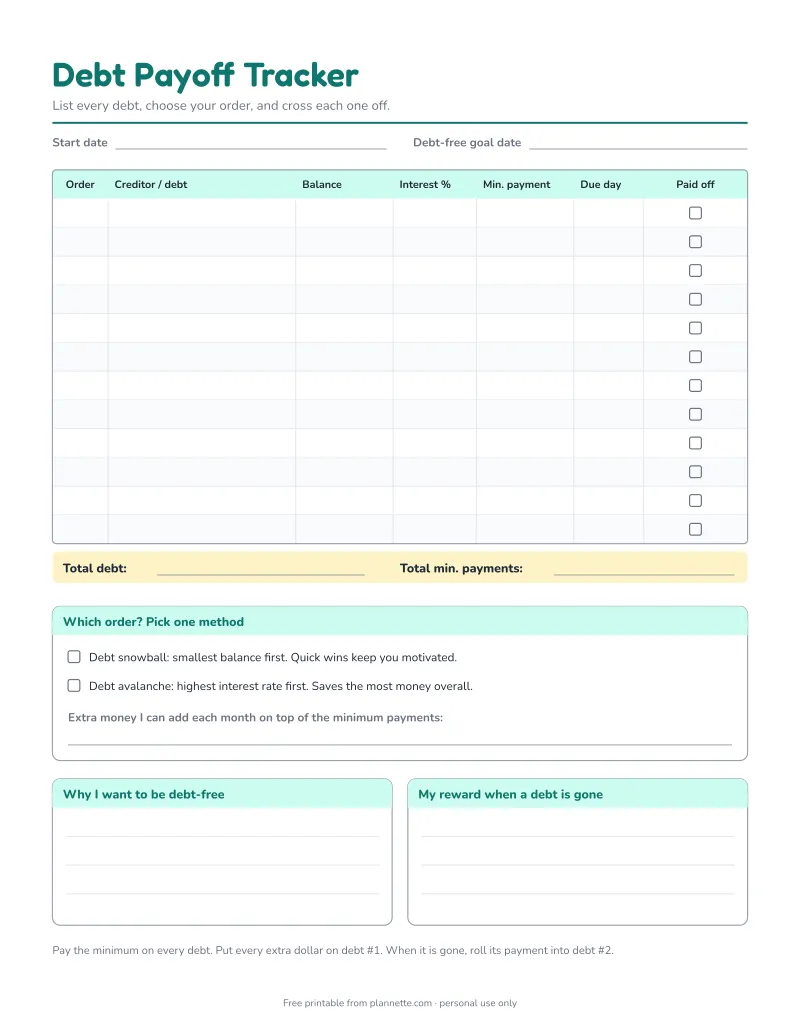
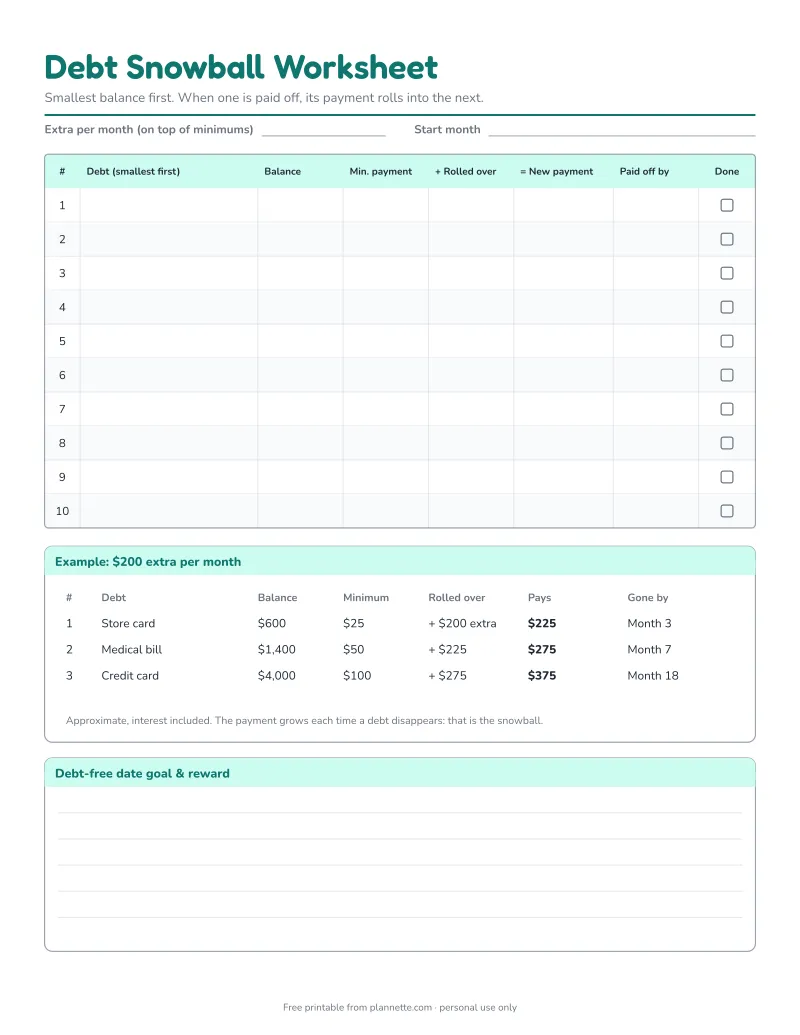
The debt snowball pays off your smallest debt first, then rolls that payment into the next one, so your payment grows like a snowball rolling downhill. This one-page worksheet does the planning with you and includes a worked example.
Free printable · no sign-up
How the debt snowball works
- List all debts from the smallest balance to the largest, ignoring the interest rate.
- Pay the minimum on every debt.
- Put every extra dollar on debt #1 until it is gone.
- Roll its whole payment into debt #2, which now gets its own minimum plus the old payment.
- Repeat until every debt is paid.
The example on the worksheet
| # | Debt | Balance | Minimum | Rolled over | New payment | Gone by |
|---|---|---|---|---|---|---|
| 1 | Store card | $600 | $25 | + $200 extra | $225 | about month 3 |
| 2 | Medical bill | $1,400 | $50 | + $225 | $275 | about month 7 |
| 3 | Credit card | $4,000 | $100 | + $275 | $375 | about month 18 |
The credit card kept getting its $100 minimum the whole time, so by the time the snowball reaches it, the balance is already lower. Numbers are rounded and include some interest; your own statements give the exact figures.
Make the snowball faster
- Find a bigger extra amount. Cancel one subscription, sell one thing, pick up one extra shift. Every $50 a month speeds up the whole chain.
- Use windfalls. Tax refunds, bonuses and gifts go straight to the current target debt.
- Do not take on new debt while you are paying off the old.
- Track progress visually. Our debt payoff tracker has a colour-in progress bar for each debt.
Bills that come once a year, like car insurance, often end up on a credit card. A sinking fund keeps them off it once you are debt-free.
Questions
Does the debt snowball ignore interest rates?
It orders debts by balance, not by rate, so you may pay a little more interest than with the avalanche method. The trade-off is faster early wins, which helps many people stick with the plan.
How do I fill in the "Rolled over" column?
For debt
How do I estimate the payoff month?
Divide the balance by the new payment for a rough number of months. Interest adds a bit more, which is why the example on the sheet is rounded up.