Debt Payoff Tracker (Free Printable PDF)
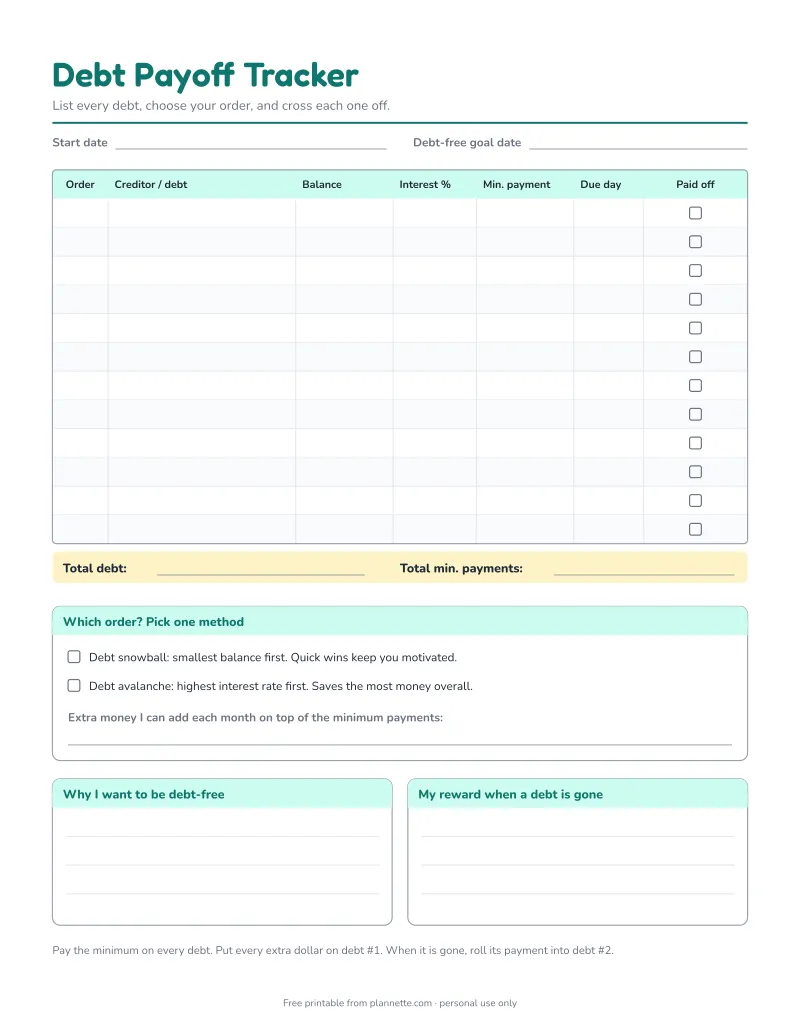
Write every debt on one page, decide which one to attack first, and colour in a box for every 5% you pay off. This free 2-page debt tracker works with both the debt snowball and the debt avalanche method.
Free printable · no sign-up
How to use the debt tracker
Page 1, the overview:
- List every debt: creditor, current balance, interest rate, minimum payment and the day it is due.
- Add up the totals in the yellow bar. Seeing one number is uncomfortable, but it is the starting point.
- Choose a method (snowball or avalanche) and number your debts in the “Order” column.
- Write down your extra amount: the money you can pay on top of all minimum payments each month, even if it is only $25.
Page 2, the progress cards:
Give each of your first four debts a card. Write the starting balance, and every time another 5% is gone, colour one box. Log every payment at the bottom so you always know the current balance.
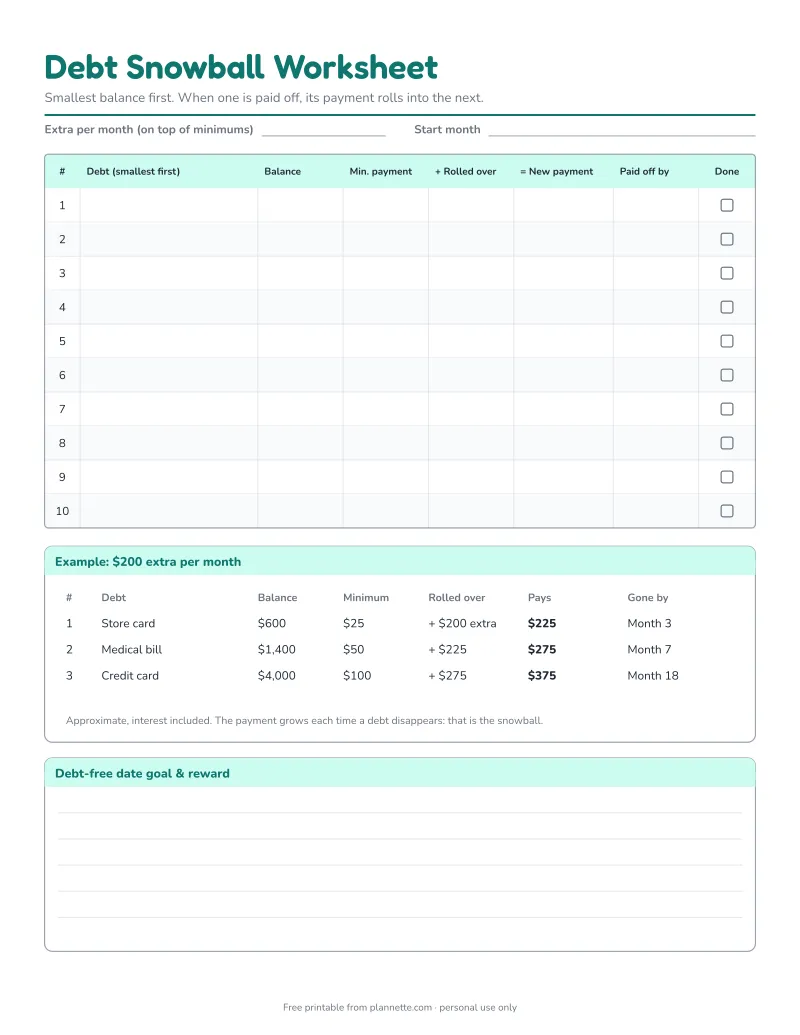
Snowball vs. avalanche: an example
Say you have three debts and $200 extra each month:
| Debt | Balance | Interest | Snowball order | Avalanche order |
|---|---|---|---|---|
| Store card | $600 | 24% | 1 | 2 |
| Credit card | $3,400 | 27% | 2 | 1 |
| Car loan | $8,200 | 7% | 3 | 3 |
With the snowball, the store card is gone in about three months, and its payment rolls into the credit card. With the avalanche, you start on the 27% card and pay a little less interest overall. Both work, as long as you keep going.
Tips that make it stick
- Always pay every minimum. Extra money goes to one debt at a time; the others just get their minimum.
- Roll payments forward. When a debt is paid off, add its whole payment to the next one. That is what makes the snowball grow.
- Stop adding new debt. Put the card in a drawer while you pay it down.
- Celebrate small. Use the “My reward” box on page 1 for cheap rewards, like a movie night, not a shopping trip.
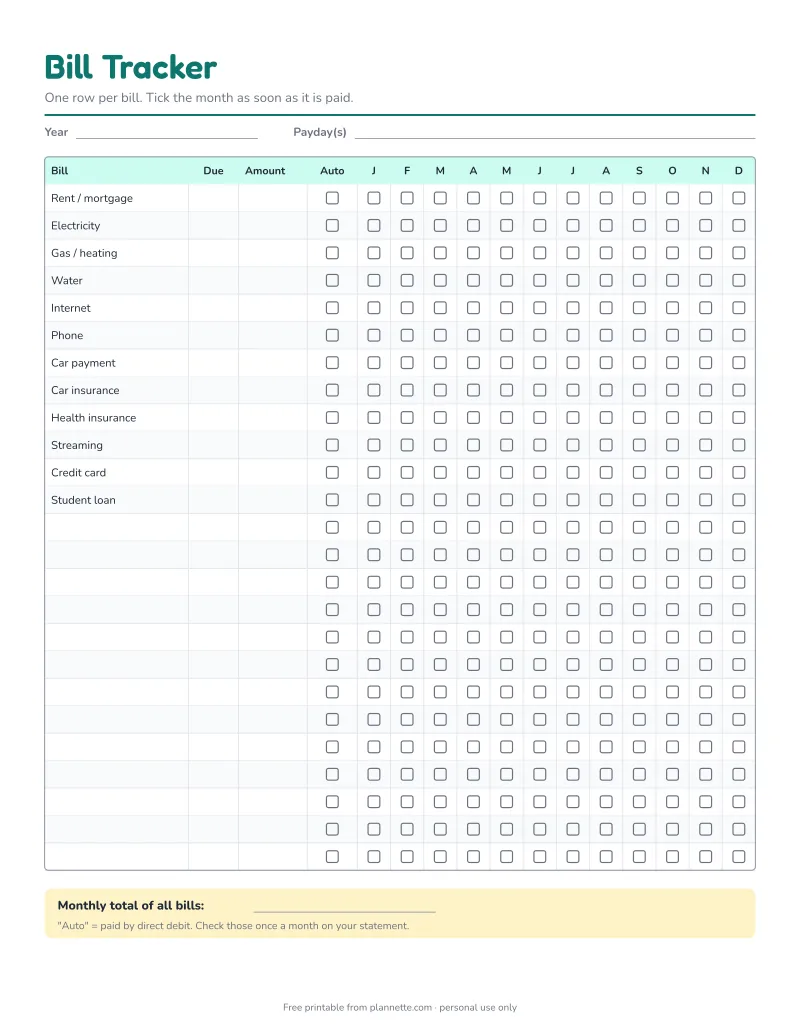
Paying off debt goes faster with a plan for the bills you know are coming. Our sinking funds tracker helps you save for those, so they do not end up on a credit card again.
Questions
Snowball or avalanche, which method should I use?
The avalanche (highest interest rate first) costs less in total. The snowball (smallest balance first) gives you a win sooner, which keeps many people going. If you have quit a plan before, the snowball is often the better choice.
Which debts should I put on the tracker?
Everything you owe with a monthly payment, such as credit cards, car loans, student loans, personal loans, medical bills and buy-now-pay-later plans. A mortgage is usually tracked separately.
How do I fill in the progress boxes?
Each box stands for 5% of the starting balance. For a $2,000 debt, colour one box for every $100 paid off. Twenty boxes means the debt is gone.